
News2 min read
WorkSafeNB: AI Is Writing Safety Policies That Cite the Wrong Province


The Saint John regulator has seen AI-drafted OHS documents that quote other provinces' laws, U.S. standards, or skip the hazards in the actual shop. Using a chatbot does not count as due diligence.
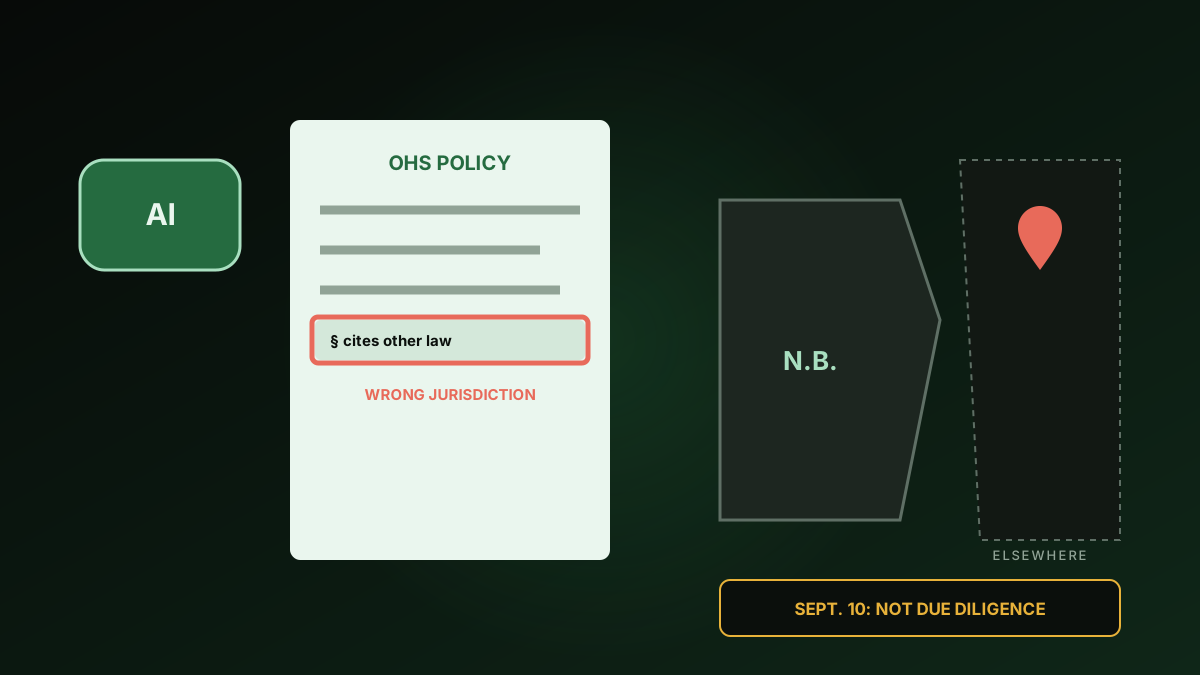
WorkSafeNB told employers Thursday that artificial intelligence can help draft a health-and-safety document — and that it has already seen those drafts get the law wrong. The advisory is dated September 10. It is not a ban. It is a record of what the regulator is finding when shops paste a generated policy into the binder.
The list is specific. AI-written policies and procedures have referenced other provinces' legislation, cited U.S. occupational health and safety standards instead of New Brunswick's, been inaccurate or incomplete, left out workplace-specific hazards or required procedures, and created privacy and confidentiality problems.
That is the New Brunswick version of a pattern this desk has already watched in the courts and the classroom: a fluent document that is not local. A Miramichi defence lawyer admitted filing Provincial Court briefs with fictitious citations. The province's 12-year education plans now require AI literacy without naming a vendor. WorkSafeNB is the workplace-safety cut of the same problem — a generated policy that looks finished and names the wrong statute.
The duty does not move
The regulator's line is the same one every OHS officer already uses, with a chatbot inserted. The employer is responsible for policies, procedures, and codes of practice that comply with New Brunswick's Occupational Health and Safety Act and regulations and that match the hazards in that workplace. AI cannot be expected to know the particular shop.
If you use it to draft, WorkSafeNB says, review and verify before the document goes into practice. Check that citations are accurate, current, and specific to New Brunswick. "Using AI does not replace your duty to exercise due diligence."
Canadian HR Reporter picked the advisory up on September 11 and put it in a national file of professional AI errors — Ontario auditor-general findings on fabricated clinical transcription, Alberta human-rights citations that did not exist. The NB news is narrower: the provincial safety board has seen enough bad binders to publish a warning of its own.
WorkSafeNB's head office is on Portland Street in Saint John. The advisory does not name employers, tools, or how many files it reviewed. It does not need to. The instruction is for every shop that still has to write a policy for this province.
Sources
- Need to develop health and safety policies, procedures or codes of practice? Read this first. — WorkSafeNB — Sept. 10, 2026 advisory; error list; due-diligence language
- WorkSafeNB warns employers: AI is getting your OHS policies wrong — Canadian HR Reporter — Louise Smith, Sept. 11, 2026; national context
- Occupational Health and Safety Act — New Brunswick — statute the advisory says policies must meet
- WorkSafeNB — regulator home
Related coverage
News · October 9, 2026
Fredericton Firm Pitches Miramichi a 375-Megawatt Data Centre Campus
News · September 9, 2026
Saint John's Versos Puts NVIDIA Agents on Video Libraries — and Takes Them to Amsterdam
News · September 1, 2026
Province Asks for Comment on How Data Centres Get Built Here